|
|
Controlling Red Mite in Chicken Houses Getting the upper hand with a severe Red Mite infestation requires persistence and attention to detail, and it may involve using more than one approach.
1. Operator hygiene and wearing suitable protective clothing to prevent the spread of mite between sites. 2. Sealing up of as many joints and crevices as possible, to reduce the number of areas which harbour mite 3. Efficient disposal of mite-infested litter and debris, to prevent re-infestation (we suggest burning) 4. Repeat treatment needs to be undertaken within seven days to maximise the effect and catch the largest possible number of mite. 5. Constant vigilance and prompt treatment of any hotspots. 6. Use of a poultry tonic or vitamin supplement to help the birds recover and increase their resistance to re-infection
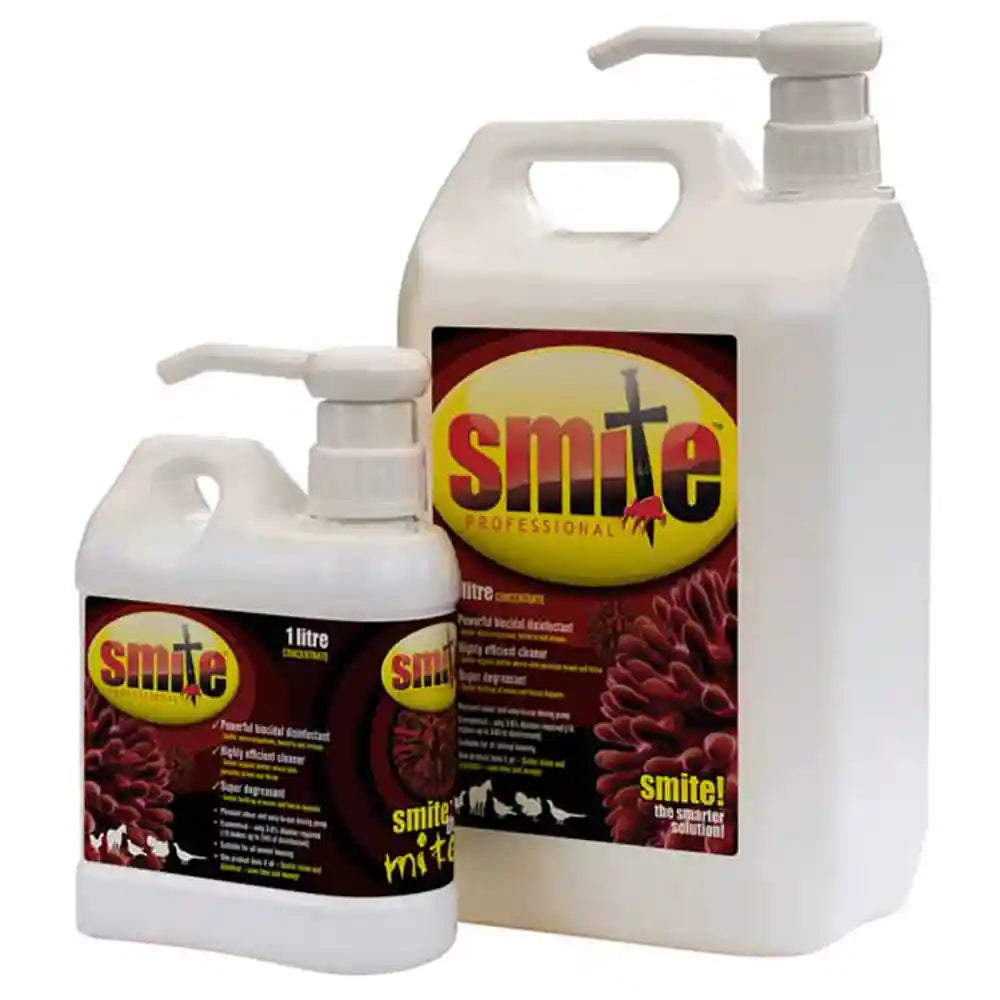
Cleaning routine with Smite Red Mite Liquid:
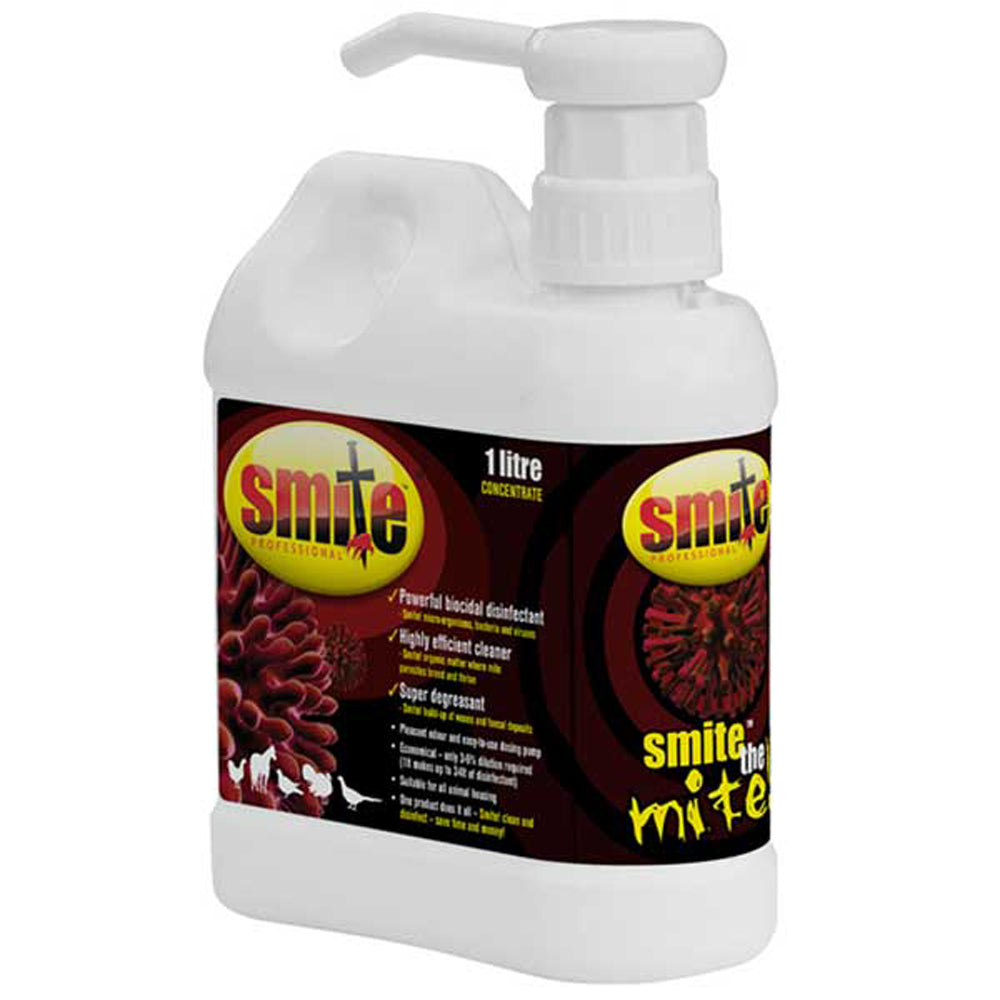
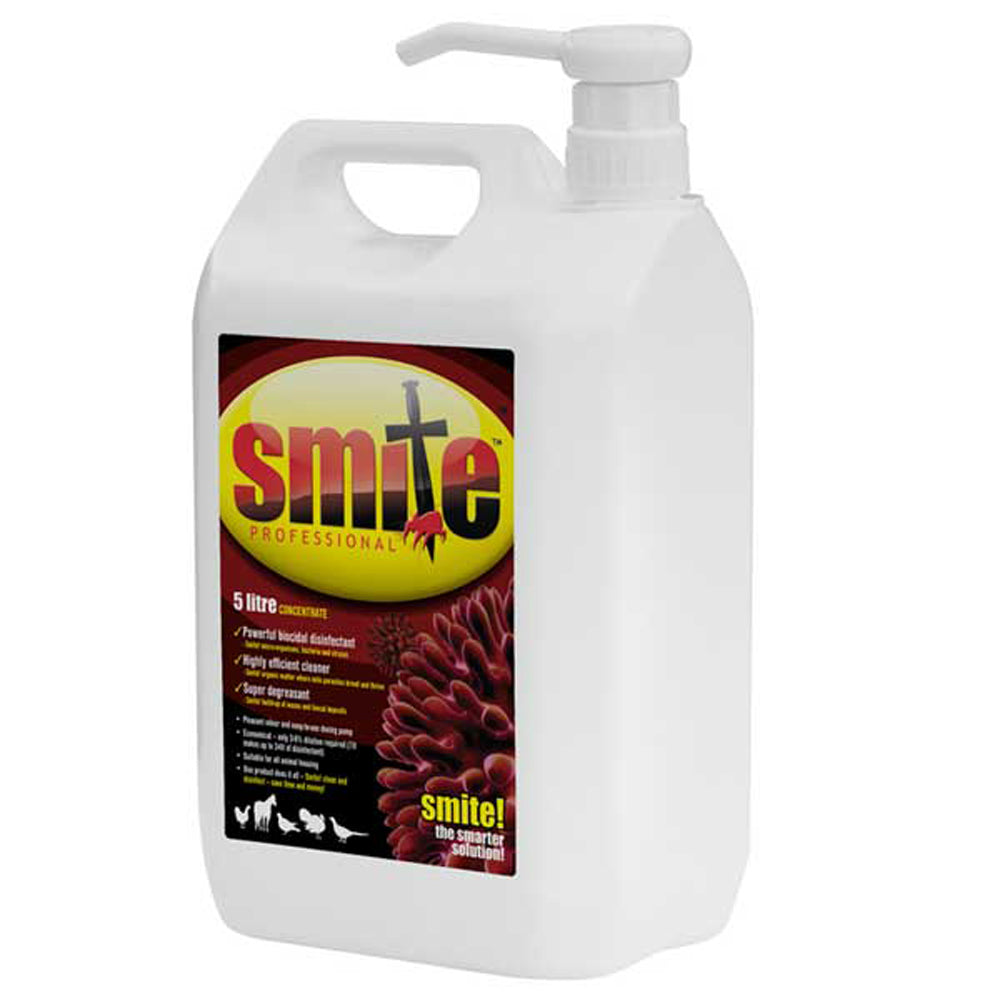
1. Firstly, spray liberally with 6% solution (2 30ml pump shots per litre water) of SMITE to equipment and nesting areas. This reduces the number of mite initially and gives a more comfortable environment for the workforce. SMITE is not licensed to be sprayed on the birds, but it is safe to spray the housing with the birds in situ and any overspray will not cause a problem.
2: Remove all equipment from the unit, including any plastic slats, as these can harbour mite in the joints.
3: The housing unit and equipment should then be thoroughly cleaned and disinfected to a clinical standard, using a 6% solution of SMITE. Take care to remove all litter and manure from every area, thus removing as many mites as possible. Pay particular attention to cracks and crevices, perches and joints.
4: When a new crop of birds has been introduced and the unit temperature has stabilised, spray with a 6% solution of SMITE, as any remaining mites will now suddenly become very active, especially if the unit has been empty for some time
5: Spray the whole housing unit again with a 6% solution 7 days later. In ideal conditions, Red Mite have a reproduction cycle of 7 days and this will treat any eggs which have hatched since the initial spraying. In severe infestations, the treatment should be repeated every 7-10 days until the infestation is under control.
6: For continued control, routine spraying with a 3% solution of SMITE (1 x 30ml pump dose per litre of water) should be done every 4-6 weeks, without fail, even if mites are not visible
Complementary good practise for henhouse cleaning:
In addition to the essential full cleandown procedure detailed above (which cannot be avoided!), consider the following, pesticide-free, additional good practices to discourage reinfestation:
* There is no substitute for good husbandry! Keep your birds clean, and well supplied with fresh drinking water and food.
* Be observant, look for pale faces and wattles, depressed birds, lacking vitality, reduced egg production and weight loss, or even weight gain.
* Use an essential oil-based Red Mite Repellent powder on the birds and in the nest boxes.
* Use diatomaceous earth (a natural mineral product), which is a very fine powder which can be sprinkled on the litter and in the nest boxes. The grains have razor-sharp edges which shred the mite exoskeleton when they come into contact with it. The mineral is safe for hens to ingest and has beneficial effects on the digestion
* Remember that brand new housing is vulnerable (including plastic henhouses), dont be complacent!
* Use a good poultry tonic, vitamin, herbal supplement to increase the resistance of the hens to mite attack.
* Garlic, either as a supplement added to the drinking water or as a clove placed in the drinker, is widely reputed to be an effective mite repellent.
* Apple Cider Vinegar is reputed to have many health advantages, and is often used as a general tonic and mineral supplement, for increased egg production, improved feathering and bone development, increased disease resistance and also decreased attractiveness to blood-sucking parasites.
Reproduced by kind permission of PestTrappa Tel: +44 (01246) 264635 or info@smite-a-mite.com
|